

Table of Contents
- Introduction
- Video Lesson: Master English Conversation – Intermediate Level
- Who This Course & Guide Are For
- What You Will Learn in This Intermediate Conversation Course
- Core Grammar for Natural Intermediate Conversation
- Real-Life Conversation Topics Covered
- Simple vs Continuous Tenses – Everyday English
- Present Perfect vs Past Simple – Talking About Experiences
- Comparatives & Superlatives – Describing & Comparing
- Gerunds, To-Infinitives & Bare Infinitives
- Using A, An & The Naturally
- Conditionals, Modal Verbs & Past Modals
- Reported Speech & Auxiliary Verbs
- Key Vocabulary Topics in Detail
- Sample Intermediate Dialogues
- Practice Exercises
- Summary
- CTA – Continue Your English Journey with LangAdvance
Introduction
You’re not a beginner anymore – you can understand a lot of English – but maybe you still feel stuck when you try to speak.
You search for words, you hesitate with grammar, and you’re not sure if you sound natural. If this is you, the course
“Master English Conversation – Intermediate Level” is exactly what you need.
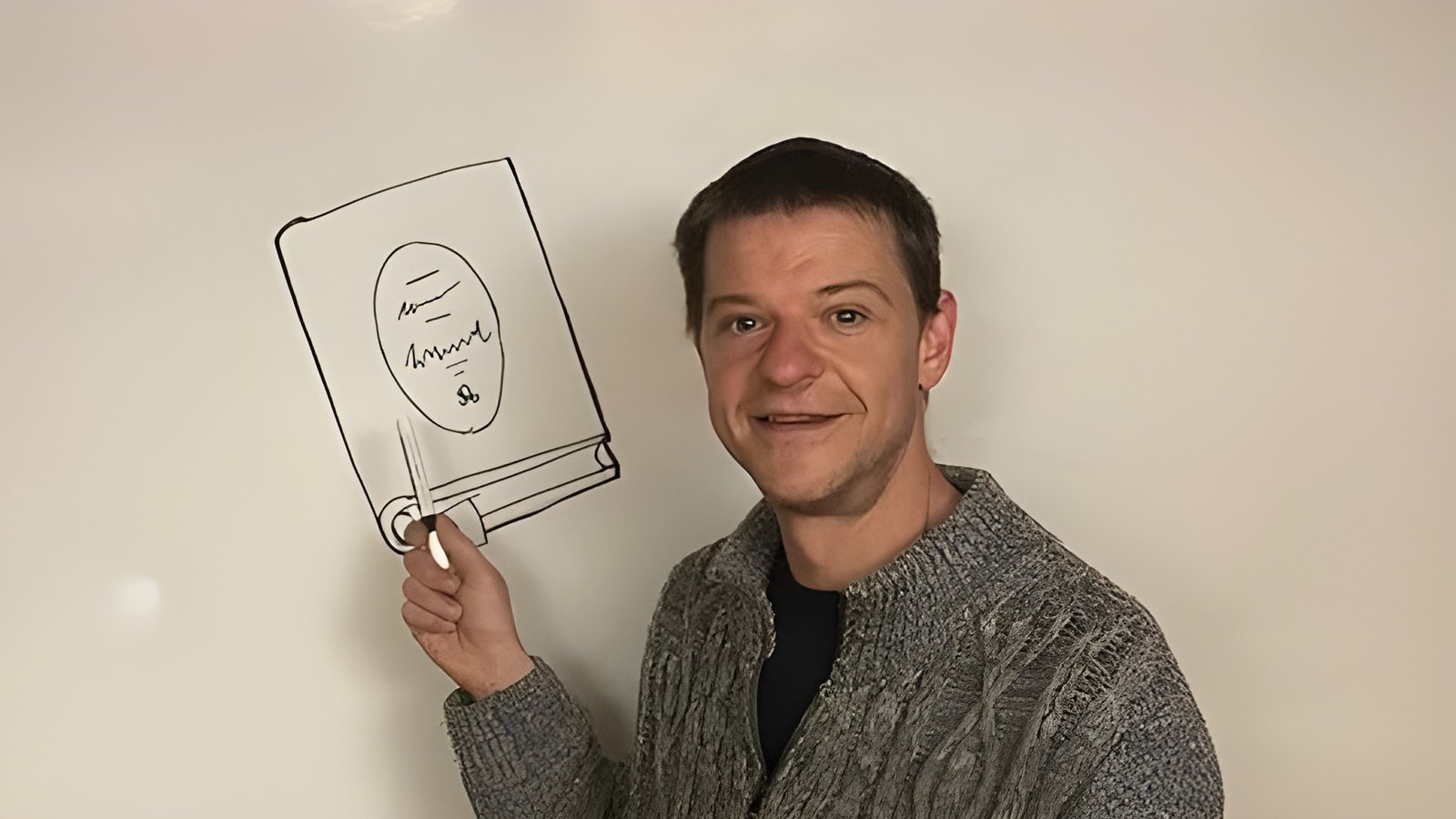
Taught by a professional and experienced native Brit, this course is the sequel to the pre-intermediate level and is designed
to push you confidently towards upper-intermediate English. You learn the grammar you really use in conversation, plus a wide
range of vocabulary topics like cooking, sport, driving, money, health, work, crime, education, cinema, weather, and more.
This article is a companion guide to the course: it gives you an overview of the lessons, explains key grammar and vocabulary
in clear English, and offers extra examples, mini dialogues, and practice questions you can use to strengthen your conversation
skills.
Video Lesson: Master English Conversation – Intermediate Level
Watch the course-related video here:
Who This Course & Guide Are For
This intermediate conversation course is ideal for:
- Intermediate students of English as a second language (B1–B2 level).
- Learners who finished beginner or pre-intermediate courses and want the “next step”.
- Students who know basic grammar but struggle to use it fluently in speaking.
- People who want to move up to upper-intermediate and advanced courses later.
The main requirement is an intermediate level of English. If you find this level too hard, it’s better to start
with a beginner or pre-intermediate course; if you find it too easy, you can move on to advanced grammar, advanced vocabulary,
or phrasal verb courses.
What You Will Learn in This Intermediate Conversation Course
By the end of the course, you will be able to:
- Master a large number of vocabulary topics through lessons on everyday themes.
- Use many different tenses fluently when speaking, not just in written exercises.
- Use gerunds, to + infinitives, and bare infinitives correctly in sentences.
- Use the definite (the) and indefinite (a/an) articles more naturally.
- Use conditionals, modal verbs, reporting verbs, and auxiliary verbs with confidence.
- Understand natural-speed English from a native British teacher.
- Remember vocabulary better thanks to repetition and picture-based quizzes.
The course has 14 sections, 54 lectures, and over 13 hours of on-demand video.
Every lesson comes with questions or quizzes to help you check your understanding and memory.
Core Grammar for Natural Intermediate Conversation
Grammar is taught with a whiteboard and is always connected to real topics (food, sport, money, work, etc.). You’ll cover all
the key areas you need to sound more accurate and natural.
Key Grammar Areas
- Simple vs continuous tenses (present and past).
- Present perfect vs past simple; have done vs have been doing.
- Future tenses and different ways to talk about future plans.
- Gerunds, to + infinitives, and bare infinitives.
- Comparatives and superlatives.
- Articles (a, an, the) and common quantifiers.
- Reported speech and reporting verbs.
- Modal verbs and modal verbs of obligation.
- Past modals (could have, should have, might have…).
- Conditionals, including the third conditional.
- Auxiliary verbs (do, be, have) in questions and emphasis.
- Passive forms (basic introduction).
Real-Life Conversation Topics Covered
To help you remember new words and phrases, the course uses real topics that you can actually talk about in
everyday life:
- Food & drink (scrambled eggs, roast potatoes, cooking verbs).
- Sport and activities.
- Driving (three lessons on learning to drive).
- Common verb phrases (things we do every day).
- Money and financial situations.
- Comparing transport options.
- Health, lifestyle, and habits.
- Complaints and customer situations.
- Personality and character adjectives.
- Houses and property (three detailed lessons).
- History and past events.
- Education and studying.
- Science and basic scientific ideas.
- Cinema and films (three lessons).
- Work and jobs.
- Crime and law.
- Weather and natural conditions.
You also follow an adapted version of Nathaniel Hawthorne’s The Scarlet Letter (Chapters 1–4) with comprehension
questions, which is a great way to develop both reading and listening skills at the same time.
Simple vs Continuous Tenses – Everyday English
The course begins with “Simple vs Continuous + Food and Drink” and then revisits the idea with sport and questions. This helps
you use tenses actively, not just recognize them.
Present Simple – Habits & Routines
Use it for things that are always, usually, or regularly true:
- I have coffee every morning.
- She cooks dinner for her family every day.
- My dad drives to work, but I take the bus.
Present Continuous – Actions Now / Around Now
Use it for actions happening now or in a temporary period:
- I’m making scrambled eggs right now.
- They’re working on a new project this month.
- We’re staying with my grandparents this week.
Past Simple vs Past Continuous (with Sport)
Past Simple – completed actions at a specific time:
- We played tennis yesterday.
- I went to the gym last night.
Past Continuous – longer actions that were in progress:
- I was running in the park when it started to rain.
- They were watching a football match when the lights went off.
Present Perfect vs Past Simple – Talking About Experiences
The “Present Perfect vs Past Simple + Money” lessons show you how to choose correctly between these tenses when you talk about
your life, money, and experiences.
Present Perfect – Life Experiences & Results
Use it to talk about experiences without a specific time, or results that affect now:
- I have saved some money for a new car.
- She has already paid the bills this month.
Past Simple – Finished Time in the Past
Use it with clear past time expressions:
- I saved a lot of money last year.
- We went on holiday in 2022.
Have Done vs Have Been Doing (Health)
In the “Health + have done / have been doing” lessons, you compare:
- have done – completed actions (result focused).
- have been doing – actions in progress (activity focused).
- I have done three workouts this week. (result: three finished workouts)
- I have been doing more exercise recently. (focus on the ongoing habit)
Comparatives & Superlatives – Describing & Comparing
In “Comparatives, Superlatives, and Transport”, you practice talking about differences between places, vehicles, and other
things.
Comparatives
- Trains are faster than buses.
- Driving is more convenient than taking the bus.
Superlatives
- This is the cheapest way to travel.
- That was the most interesting documentary I’ve ever seen.
Gerunds, To-Infinitives & Bare Infinitives
At intermediate level, using gerunds and infinitives correctly is essential. The course helps you use them fluently in your own
sentences.
Gerunds (Verb + -ing)
- I enjoy cooking for my friends.
- He hates driving in heavy traffic.
To-Infinitives
- I want to improve my English.
- She decided to change her job.
Bare Infinitives (after make / let)
- My parents made me do my homework.
- The teacher let us finish early today.
Using A, An & The Naturally
Articles are a common problem for learners. In topics like “Houses and Property”, you get lots of practice with
a/an and the.
A / An – Indefinite Articles
- We bought a house near the city centre.
- They live in an old apartment building.
The – Definite Article
- The house we saw yesterday was perfect.
- Have you cleaned the kitchen yet?
Conditionals, Modal Verbs & Past Modals
The “Third Conditional”, “Modal Verbs of Obligation”, and “Past Modals and History” sections teach you to express rules,
advice, regrets, and unreal situations.
Third Conditional
Use it to talk about unreal situations in the past:
- If I had studied harder, I would have passed the exam.
Modal Verbs of Obligation
- You must wear a seatbelt in the car.
- I have to get up early tomorrow.
- You should call your parents more often.
Past Modals
To talk about past possibility, criticism, or missed chances:
- You should have told me about the problem earlier.
- They could have won the game, but they made too many mistakes.
- He might have forgotten the meeting.
Reported Speech & Auxiliary Verbs
In “Reported Speech and Complaints” and “Personality and Auxiliary Verbs”, you practice reporting what people say and forming
questions correctly.
Reported Speech – Basics
- Direct: “I’m tired,” she said.
Reported: She said (that) she was tired. - Direct: “I’ve finished,” he said.
Reported: He said (that) he had finished.
Auxiliary Verbs in Questions
- Do you like action films?
- Did you go to the cinema last week?
- Have you seen the new science documentary?
Key Vocabulary Topics in Detail
Food & Cooking
Lessons like “Perfect Scrambled Eggs” and “Perfect Roast Potatoes” teach:
- Cooking verbs: boil, fry, bake, roast, grill, chop, stir, whisk.
- Kitchen nouns: pan, oven, tray, knife, cutting board.
- How to give instructions: “First, crack the eggs… then heat the pan…”.
Driving & Transport
- Driving verbs: accelerate, brake, indicate, overtake, park.
- Road vocabulary: junction, roundabout, lane, traffic lights.
- Speaking about driving lessons and driving tests.
Complaints & Customer Situations
- Polite complaint phrases: “I’m afraid there’s a problem with…”, “I’m not satisfied with…”.
- Useful verbs: refund, replace, exchange, apologise.
Education, Science, Cinema, Work, Crime & Weather
Each of these topics gives you specific vocabulary (for example, degree, experiment, crime scene, forecast) and
phrases you can use in conversations, exams, or everyday life.
Sample Intermediate Dialogues
Dialogue 1 – At the Cinema
A: Have you seen the new science-fiction film?
B: Yes, I saw it last weekend. It was better than I expected.
A: Really? I’ve heard it’s the most exciting film of the year.
B: It might be a bit long, but the special effects are amazing.
Dialogue 2 – Health & Habits
A: You look healthier. Have you been doing more exercise?
B: Yes, I’ve been going to the gym three times a week.
A: That’s great. How long have you been doing that?
B: For about two months, and I’ve also stopped eating junk food.
Dialogue 3 – Complaint in a Shop
Customer: Excuse me, I’m afraid there’s a problem with this jacket. There’s a tear in the sleeve.
Assistant: I’m very sorry about that. When did you buy it?
Customer: I bought it yesterday afternoon.
Assistant: I understand. I can offer you a refund or a replacement. Which would you prefer?
Practice Exercises
Exercise 1 – Simple vs Continuous
Choose the correct form (Present Simple or Present Continuous):
- I ________ (cook) dinner right now.
- She usually ________ (go) to work by bus.
- We ________ (watch) a film at the moment.
Exercise 2 – Present Perfect vs Past Simple
Complete with have/has + past participle or Past Simple:
- I __________ (visit) London in 2019.
- She __________ (just / finish) her homework.
- We __________ (save) some money last month.
Exercise 3 – Articles
Fill in with a, an or the:
- We bought ____ house in ____ small town.
- Did you enjoy ____ film we watched yesterday?
- He wants to buy ____ electric car.
Exercise 4 – Third Conditional
Complete the sentences:
- If I __________ (know) about the test, I __________ (study) more.
- If they __________ (leave) earlier, they __________ (catch) the train.
Summary
“Master English Conversation – Intermediate Level” is a complete training program for learners who want to move beyond basic
English and speak with more accuracy and confidence. It combines clear explanations, realistic speed listening, strong grammar
practice, and rich vocabulary topics, from food and driving to work, crime, cinema, and weather.
With regular quizzes, repetition of key vocabulary, and story-based lessons like The Scarlet Letter, you develop all
the skills you need to progress to upper-intermediate and advanced levels. If you follow the lessons actively and speak out
loud during the course, your conversational skills will improve quickly.
CTA – Continue Your English Journey with LangAdvance
Want more structured practice to go even further with your English? At LangAdvance, you can:
- Find step-by-step English courses for beginner, intermediate, and advanced learners.
- Download vocabulary lists, grammar guides, and conversation worksheets.
- Study topic-based lessons for work, travel, exams, and everyday life.
- Combine video lessons with long-form articles and exercises like this one.
Keep practicing daily, speak out loud as you learn, and you will master English conversation at intermediate level and beyond.